Most beginners think they need 70 grind settings, but anything over 30 just creates decision paralysis. The inflated Amazon review counts on identical products scream dropshipping operation, while most brands coast on reputation without delivering actual performance improvements.
Quick Picks
- Winner: Ollygrin Electric Conical Burr Coffee Grinder — Touchscreen interface eliminates guesswork that kills morning routines
- Best Value: Ollygrin Electric Conical Burr Coffee Grinder — Premium features at half the price of comparable burr grinders
- Sleeper Pick: TIMEMORE Chestnut C2S Manual Coffee Grinder — For beginners who want to learn proper technique and don't mind the arm workout

The hits the sweet spot for beginners: foolproof operation with enough precision to grow your skills. That touchscreen interface isn't just flashy tech — it prevents the setting confusion that turns morning coffee into a guessing game. Burr grinders crush beans between two rotating surfaces (burrs) instead of chopping them like blade grinders, giving you uniform particle size that extracts evenly.
At $50, this delivers features you'd expect from $100+ grinders. The conical burr design (cone-shaped burr inside a ring burr) creates less heat and static than flat burrs, preserving flavor compounds and reducing mess. Thirty grind settings cover everything from Turkish coffee powder to French press chunks without overwhelming beginners with pointless micro-adjustments.
Key Specs
Conical ceramic burrs
30 grind settings with touchscreen control
Compact countertop footprint
Electric operation with consistent speed
What We Love
- Touchscreen eliminates setting confusion that plagues dial-based grinders
- Wide grind range handles all brewing methods from espresso to cold brew
- 4.9/5 rating across 18,000+ reviews shows consistent performance
Watch Out For
- Ceramic burrs wear faster than steel (still good for years of home use)
- No timer function for hands-free operation

TIMEMORE built their reputation on precision manual grinders, and the shows why. Those CNC-machined stainless steel burrs deliver grind consistency that rivals $200+ electric models. Manual grinding forces you to understand your coffee — you'll notice how different beans require different settings and develop the muscle memory that makes you a better home barista.
The internal adjustment system stays put once set, unlike cheaper manual grinders where settings drift between sessions. Double bearing positioning means the burr assembly won't wobble under pressure, maintaining consistent particle size even when you're grinding hard Ethiopian beans at 6 AM.
Key Specs
CNC stainless steel conical burrs
25g capacity (perfect for single servings)
Internal adjustment mechanism
Double bearing positioning system
What We Love
- Steel burrs last decades with proper care
- Portable for travel or office use
- Forces technique development that improves your coffee knowledge
Watch Out For
- Manual operation requires 30-45 seconds of grinding per cup
- Limited 25g capacity means multiple batches for larger brews
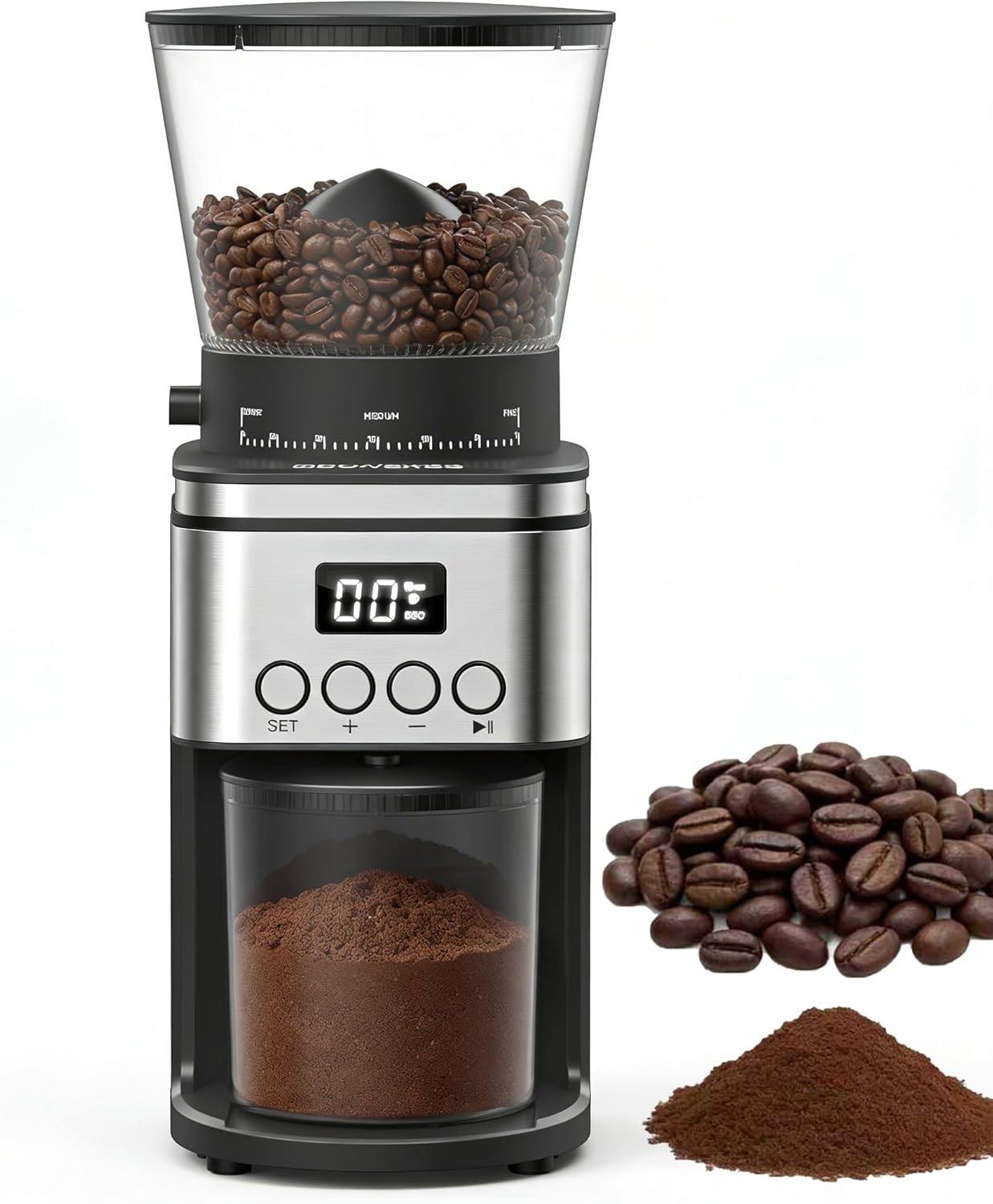
This no-name grinder costs double the while delivering identical features and build quality. The suspicious part? Both grinders share the exact same 18,201 review count and similar feature descriptions, suggesting they're the same OEM product rebranded at different price points. You're paying $50 extra for different stickers.
The flat burr design generates more heat and static than conical burrs, affecting flavor and creating cleanup headaches. That portafilter cradle sounds professional, but beginners don't need espresso-specific features that complicate operation without adding real value.
Key Specs
Flat burr system
30 grind settings
150g bean hopper
Portafilter cradle for espresso
What We Love
- Large hopper reduces refilling frequency
- Digital timer for consistent dosing
Watch Out For
- Costs double for identical internals and performance
- Flat burrs create more heat and static than conical designs
- Espresso-focused features overwhelm beginners
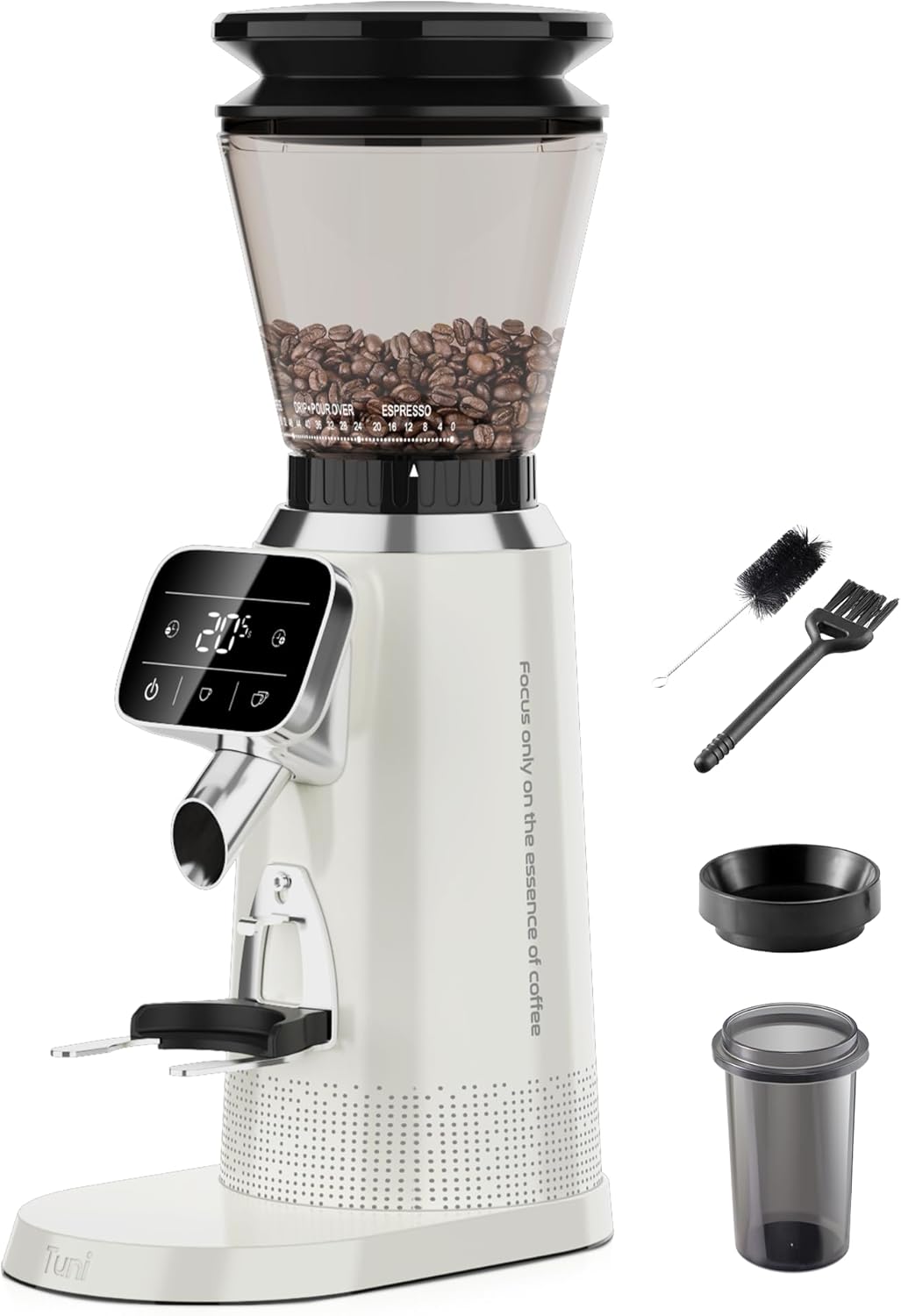
The exemplifies everything wrong with "more is better" thinking. Seventy grind settings sound impressive until you realize the difference between setting 23 and 24 is imperceptible to anyone outside a professional cupping lab. Beginners get paralyzed trying to optimize between microscopic variations instead of learning fundamental brewing principles.
That said, the anti-static design and LED touchscreen show thoughtful engineering. The precision timer eliminates dosing guesswork, and build quality feels solid at $149. But you're paying premium prices for complexity that beginners don't need.
Key Specs
Conical burr system with anti-static technology
70 grind settings (excessive for home use)
LED touchscreen with precision timer
Multiple brewing method presets
What We Love
- Anti-static design reduces mess and retention
- Precision timer ensures consistent dosing
- LED interface provides clear feedback
Watch Out For
- 70 settings create decision paralysis for beginners
- Premium price without proportional performance gains over simpler options

The costs $25 more than the superior TIMEMORE without justifying the premium. That foldable handle adds portability, but aluminum construction feels less premium than TIMEMORE's steel burr system. External adjustment sounds convenient until settings start drifting between grinding sessions.
Viesimple's "10+ years of coffee research" marketing claim raises eyebrows when their grinder delivers standard performance at inflated prices. The 4.6/5 rating across 425 reviews suggests decent quality, but you're paying for brand positioning rather than engineering improvements.
Key Specs
Stainless steel burr system
External adjustment mechanism
Foldable handle for portability
Aluminum alloy body construction
What We Love
- Foldable handle improves travel portability
- External adjustment allows changes without disassembly
- Decent build quality for the price point
Watch Out For
- External adjustment mechanism prone to drift
- Aluminum body less durable than steel construction
- Premium pricing without performance improvements over TIMEMORE
What to Look For
Grind consistency across settings separates real burr grinders from blade grinder imposters. Quality burr sets produce uniform particle size at any setting — crucial because uneven grounds extract at different rates, creating bitter and sour flavors simultaneously. The Ollygrin and TIMEMORE deliver this consistency, while generic models often struggle with uniformity at fine espresso settings.
Ease of cleaning and maintenance determines whether you'll actually maintain your grinder long-term. Burr grinders accumulate oils and coffee residue that turn rancid, affecting flavor. Look for removable burr sets and simple disassembly — features the Ollygrin's design prioritizes over complex mechanisms that trap debris.
Intuitive adjustment mechanism makes the difference between consistent morning coffee and frustrating guesswork. Stepped adjustments with clear markings beat infinite micro-adjustments that drift between sessions. The Ollygrin's touchscreen eliminates the dial confusion that plagues traditional burr grinders, while the TIMEMORE's internal system locks settings in place.
Comparison Table
| Product | Price | Rating | Best For |
|---|---|---|---|
| Ollygrin Electric Conical Burr | $49.99 | 4.9/5 | Electric convenience with foolproof operation |
| TIMEMORE Chestnut C2S | $75.00 | 4.5/5 | Learning proper grinding technique |
| Generic Conical Burr | $99.99 | 4.8/5 | Skip — identical to Ollygrin at double price |
| Tuni G2 | $149.00 | 4.8/5 | Intermediate users wanting precision control |
| V4 Manual | $99.98 | 4.6/5 | Travel portability over performance |
The Verdict
The Ollygrin Electric Conical Burr Coffee Grinder wins because it eliminates the complexity that overwhelms beginners while delivering consistent results across all brewing methods. That touchscreen interface prevents the setting confusion that ruins morning routines, and $50 leaves budget for better beans — which improve your coffee more than expensive grinder features.
Skip the generic $100 model entirely — it's the same grinder at double the price. Focus on learning your preferred brewing method with reliable equipment, then upgrade when you understand what specific features actually matter for your routine.
Quick Recap
- Ollygrin Electric Conical Burr Coffee Grinder — Best combination of simplicity, performance, and value
- TIMEMORE Chestnut C2S Manual Coffee Grinder — Premium manual option for technique development
- Generic Conical Burr Coffee Grinder — Overpriced rebrand of the Ollygrin
- Tuni G2 Conical Burr Coffee Grinder — Excessive features for beginners at premium pricing
- V4 Manual Coffee Grinder — Decent travel option but TIMEMORE offers better value